Meet Zosia, the 17th-Century Vampire Suspect Buried With a Sickle at Her Throat
In 2022, Polish archaeologists encountered an unsettling burial site of a young woman. Her toe was caught in a triangular padlock, and a sickle—the blade pointed toward the body—lay across her throat. This was so bizarre that it took the team four years to find a plausible explanation: anti-demonic practices.
cnx.cmd.push(function()cnx("playerId":"92b7b46b-43ed-4e0e-b21b-2c999302d9d7","settings":"advertising":"macros":"AD_UNIT":"/23178111854/od.gizmodo.com/article","CHILD_UNIT":"article","POST_ID":"2000804325","POST_TYPE":"post","CHANNEL":"science","SECTION":"human-history","SUBSECTION":"","CATEGORIES":"human-history","TAGS":"archaeology","NOP":"0","timeBeforeFirstAd":0).render("cnx-player-main"));
A bit of a stretch? Maybe not. To build upon this interpretation, the researchers conducted a multidisciplinary investigation of the skeleton and previous literature on similar practices, publishing their findings in the Journal of Archaeological Science: Reports. According to the paper, the woman—dubbed “Zosia”—was likely of high social status but, at the time of her burial, had become feared by her community, who placed a padlock on her toe. Then, for good measure, the community reopened the grave some time later and added the sickle so she wouldn’t, say, come back to life and curse the living.
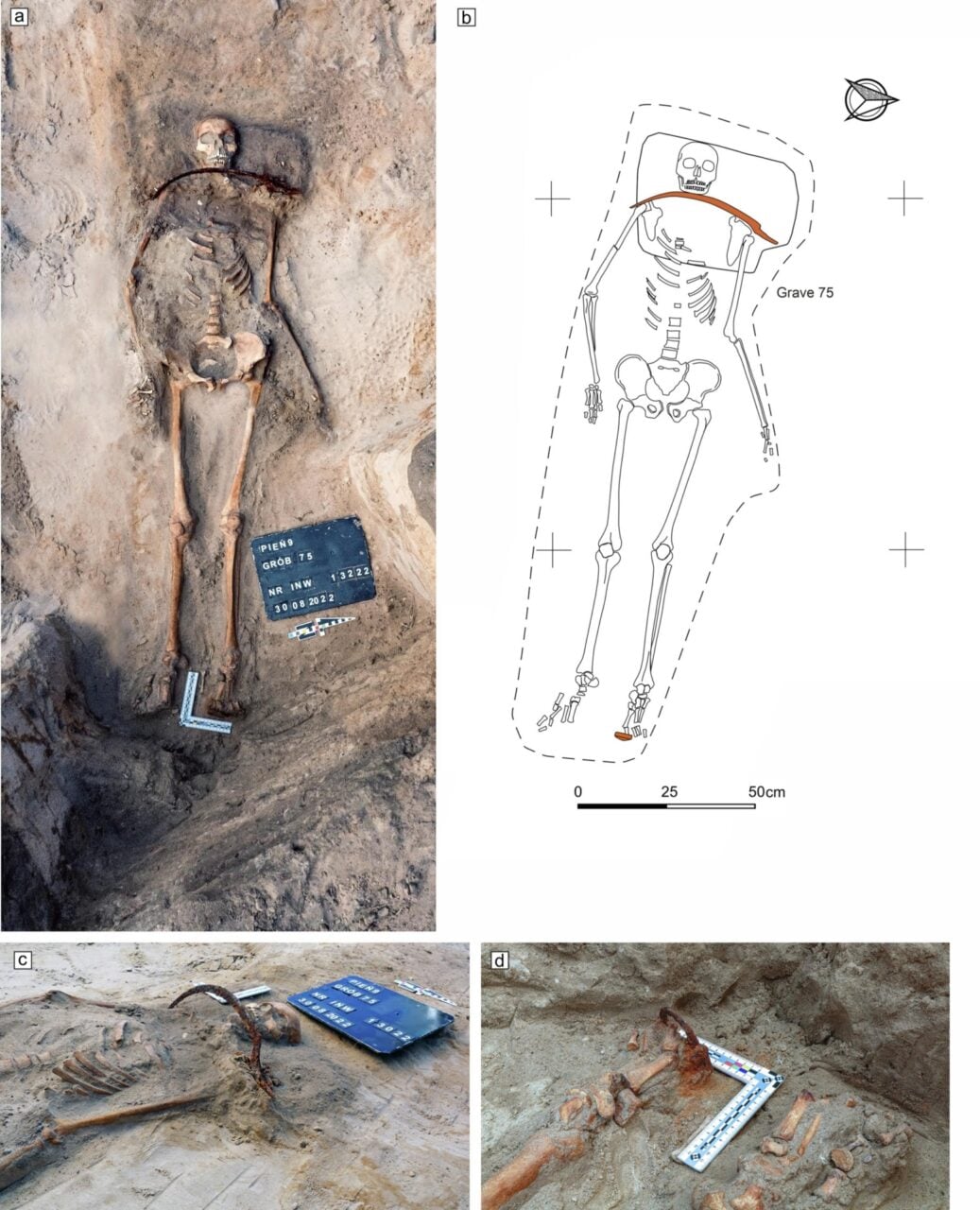
Photographs of the burial site. © Poliński et al., 2026
“It was unusual that there were two precautions, two methods of showing that this skeleton should be kept in the grave—so the fear of the body coming back to life was greater,” Dariusz Poliński, the study’s lead author and an archaeologist at the Nicolaus Copernicus University in Poland, told CNN.
Land of the vampires
Zosia’s grave, dated to the 17th century, is far from being the only gravesite demonstrating “specific, atypical practices,” as the paper put it. In fact, archaeologists have previously found instances of these “deviant” burials from post-medieval Poland, which experts have posited were a response to infectious disease outbreaks.
The researchers explained that scholars have used the term “vampiric” or “anti-vampiric” to describe these burials. However, it wasn’t until the 18th century that the term became widespread in Europe, according to the paper. In that sense, “vampire” used here—and in other archaeological contexts—refers more to a broad category for individuals past societies saw as “demonic beings.”
Too much? Maybe
The Poles from this era really went all the way with these anti-vampiric practices. For example, previous discoveries indicated it was eerily common to “pierce the heart or behead a corpse suspected of being a vampire,” according to the study. There was also a belief that unmarried individuals would attract their relatives to the grave, and to prevent them from coming back to life, one should cover their eyes with copper.
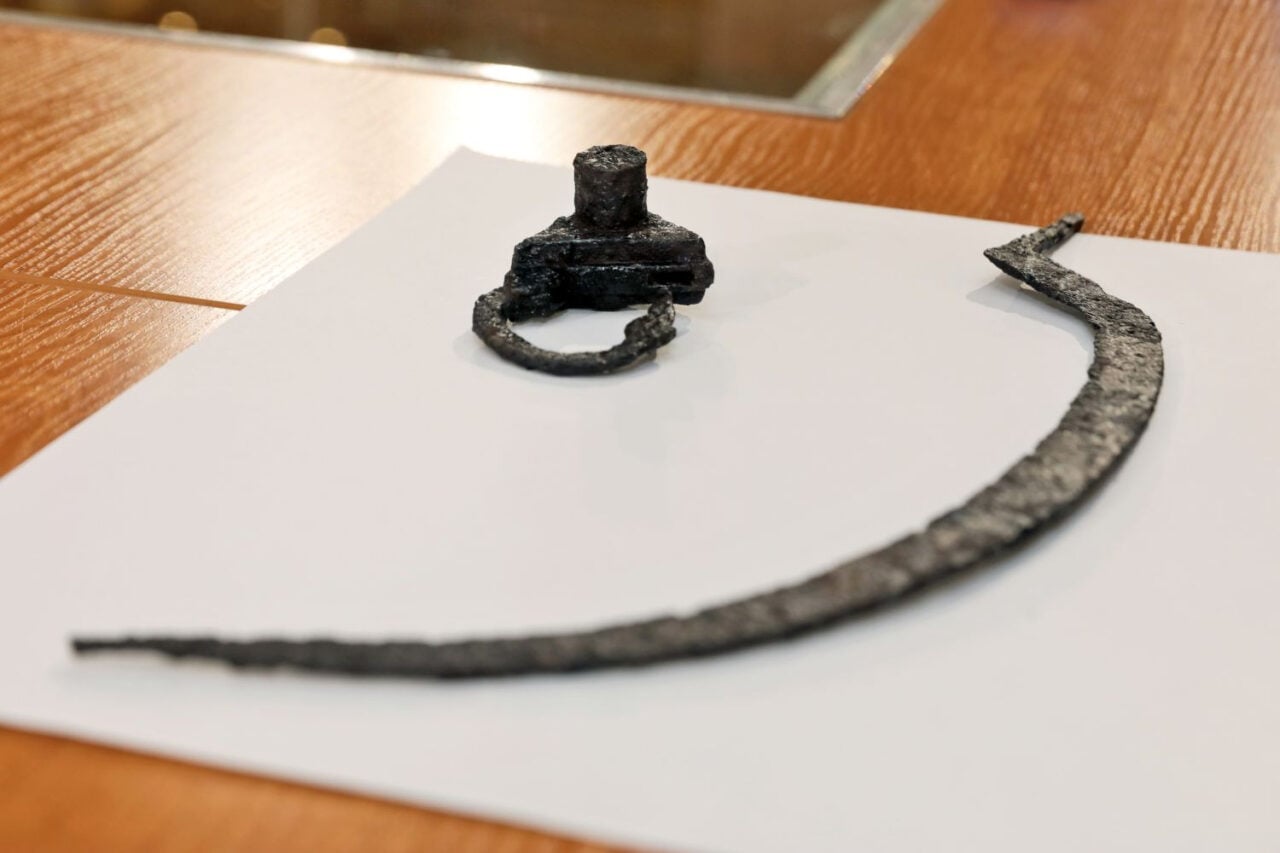
The padlock and sickle retrieved from Zosia’s grave. Credit: Andrzej Romański/Nicolaus Copernicus University
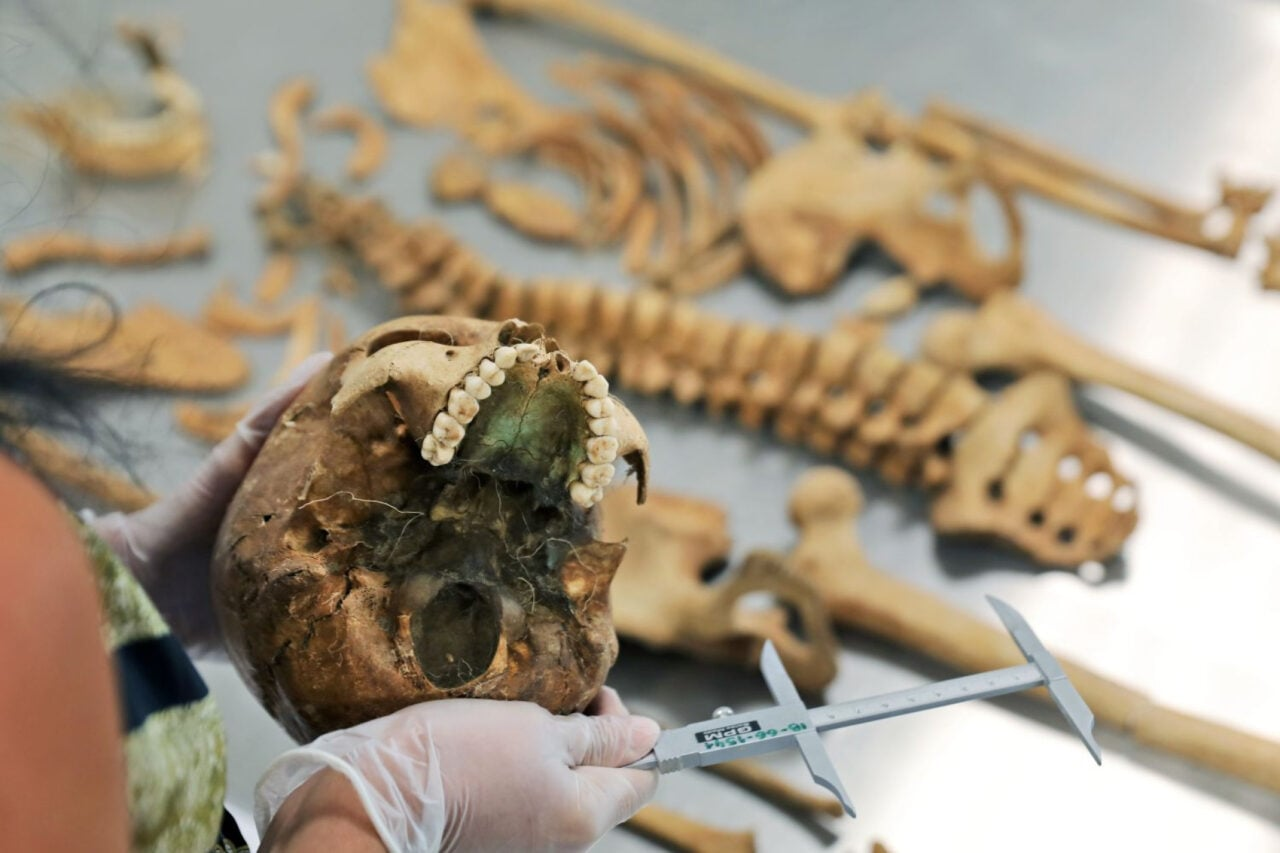
In fact, Zosia’s corpse wasn’t the only one subjected to these anti-vampiric practices at what is now the archaeological site in Pień, a village in southeastern Poland. In a 2023 interview with Science of Poland, Poliński recalled one grave with a child, between 5 and 7 years old, buried face down. Another held the remains of three children whose jaws were stained green, perhaps from the copper placed on their faces as an anti-demonic practice.
“Stereotypes of treating people suspected of vampirism testify to the fear of people who were not necessarily bad but deviated from the norm,” he explained. “It could be anything: appearance, behavior, or way of speaking, as well as an illness.”
A postmortem mystery
The latest analysis reveals many new facts about Zosia. For instance, there were traces of silk fibers and remains of a cap trimming made of silver and gold. Meanwhile, radiocarbon dating and genetic analysis suggested that Zosia wasn’t necessarily an ethnic outsider. Her nutrition levels were consistent with the conditions of Europe at the time, which were challenging.

A reconstruction of Zosia’s face by sculptor and archaeologist Oscar Nilsson, in collaboration with the research team at the Nicolaus Copernicus University. Credit: Oscar Nilsson/Projekt Pień/Nicolaus Copernicus University
She was likely between 17 and 19 years old at the time of her death. The sickle’s handle was most likely birch, alder, or maple; birch was believed to have protective properties against evil. However, the team stressed in the paper that these interpretations should be “hypotheses grounded in analogical reasoning and ethnographic parallels, rather than definitive statements about 17th‑century beliefs or motivations.”
Given the lengths her community took to keep Zosia from coming back to life, it’s perhaps ironic that archaeologists are striving to do just that. But Zosia’s life—in particular the misfortunes that brought her this macabre end—is a mysterious, yet compelling, window into the beliefs and practices of societies long gone.
AP by
OMG
Asian-Promotions.com |
Buy More, Pay Less | Anywhere in Asia
Shop Smarter on AP Today | FREE Product Samples, Latest
Discounts, Deals, Coupon Codes & Promotions | Direct Brand Updates every
second | Every Shopper’s Dream!
Asian-Promotions.com or AP lets you buy more and pay less
anywhere in Asia. Shop Smarter on AP Today. Sign-up for FREE Product Samples,
Latest Discounts, Deals, Coupon Codes & Promotions. With Direct Brand
Updates every second, AP is Every Shopper’s Dream come true! Stretch your
dollar now with AP. Start saving today!
Originally posted on: https://gizmodo.com/meet-zosia-the-17th-century-vampire-suspect-buried-with-a-sickle-at-her-throat-2000804325